
Why Is a Japanese Seal Always Red?
Black ink for the words, red for the seal. Every registered hanko in Japan, every collector's stamp, every red circle pressed at the bottom of an ink painting follows the same rule, and almost nobody asks why. Blue would be legible. Black would be cheaper. So why has the seal been red for two thousand years?
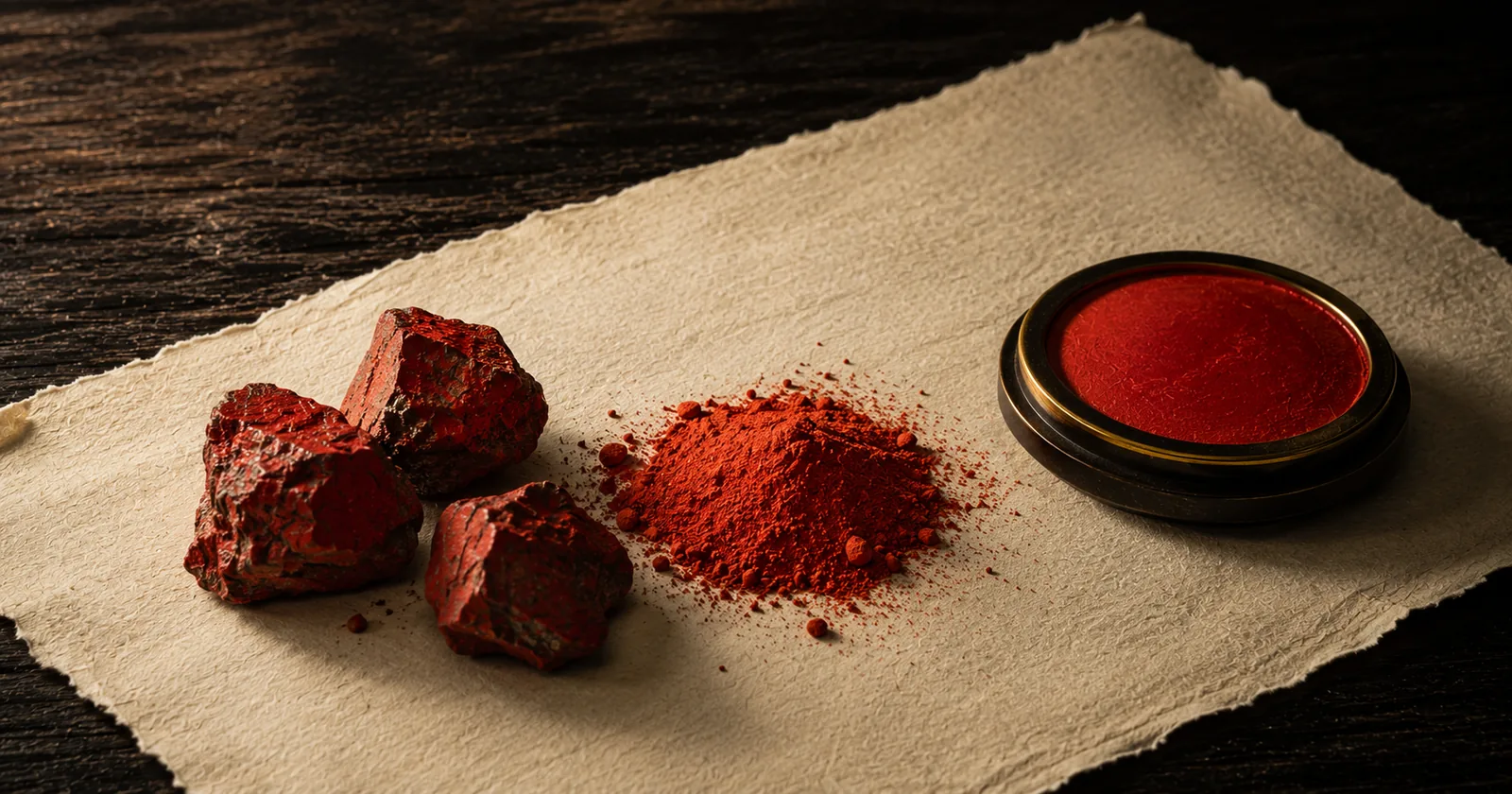
The answer is a mineral, a belief about eternity, and a quiet history of poison.
The red is a rock
The paste itself is called shuniku — "vermilion flesh" — and its color comes from cinnabar (shinsha, 辰砂), a soft red mineral that happens to be mercury sulfide. Ground fine, cinnabar yields one of the most vivid, saturated reds in nature, and the finer you grind it, the brighter it gets.
In ancient China that red was not cheap. Cinnabar was prized as a noble color, ranked in value just below gold and silver. Choosing it for a seal was never a neutral aesthetic decision — it was reaching for one of the most precious pigments available and pressing it onto the page as a mark of authority.
A color that doesn't die
There's a deeper reason, and it's the one that matters most for a seal. Cinnabar red doesn't fade. Where blue and green pigments dull and shift over the years, vermilion holds its color through centuries — which is exactly why a mineral red turns up in tomb paintings that have kept their brilliance for over a thousand years.
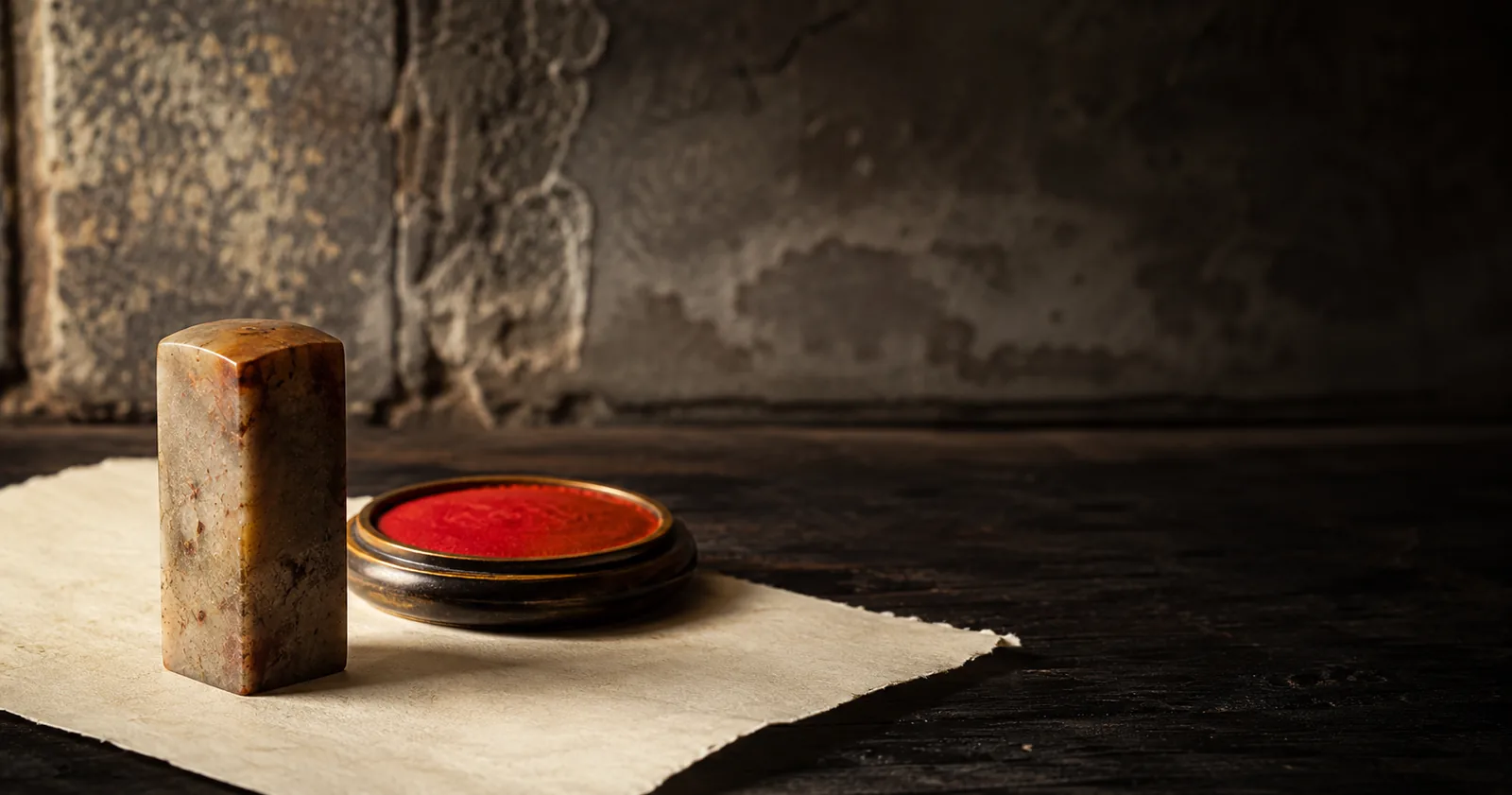
To the ancient mind, a pigment that defied time was close to magical. Cinnabar became a symbol of permanence and eternity, bound up with the search for immortality — it appears in elixirs meant to extend life and in rites meant to preserve the dead. Carry that symbolism onto a document and the logic is beautiful: the mark that proves this is mine, and this is binding is made in the one color that promises to outlast everything around it. A seal is a small claim on permanence, written in the pigment of permanence.
There's a plainer practical virtue too. A seal almost always lands on a page already covered in black brushed or printed characters. Red is the one color that leaps off that black instantly — so the impression that carries legal weight is never lost in the text. The eye finds the seal first.
The paste came late — and that's why it's called "clay"
Here's a small surprise. For all the antiquity of the seal itself, the red paste arrived relatively late — it isn't securely on the scene in China until around the Song dynasty. Before that, seals were pressed into damp clay rather than inked onto paper. The memory survives in the Chinese name for seal paste to this day: indei (印泥), literally "seal clay," even though there's no clay left in it.
The beautiful part is also poison
One catch ran through this whole story. Cinnabar is mercury sulfide, and mercury is toxic. The very pigment chosen for its incorruptible red was, chemically, a slow hazard — which is why traditional mercury-based vermilion has been retired from modern seal pastes in favor of safe synthetic and plant-based reds that reproduce the color without the danger. The look survives; the poison doesn't.
It's a fitting irony for a color tied to immortality elixirs: the ancients' favorite emblem of eternal life was, all along, faintly lethal.
The red you'll see in a SealFont signet
When SealFont composes your name, it lands in that same deliberate vermilion — chosen, like the cinnabar before it, to read as something more than ink. Not because a color can change your fortune, but because two thousand years of seals have agreed on one thing: the mark that means this is real, and it is mine is written in red.
A black signature says you were there. A red seal says it was meant to last.
Put your name in two-thousand-year-old red
Turn your name into a personal signet, composed in the seal-script tradition and delivered as a red mark you can press onto whatever you make. One of one, high-resolution, with a full commercial license.
Create yours →Keep reading: What Is Seal Script? for the writing inside the red, or What Is a Hanko? for the seals that carry it. Or browse the Journal.