
Does a Japanese seal really bring good luck?
Walk into a Japanese seal shop to order an inkan, and somewhere in the conversation the talk often turns to fortune. The strokes of your name, the eight directions of the seal face, the lucky and unlucky numbers — many shops will measure all of it and offer to "adjust" your seal toward good fortune.
It's a beautiful idea. We make seals for a living, so we wanted to be honest about it: where do these beliefs actually come from, and are they true?
We went looking. Here's what we found.
The fortune in your name is younger than you'd think
The system most Japanese shops use to read a name — counting the strokes of each character and scoring the result — is called seimei-handan, "name divination." It feels ancient. It's usually presented as rooted in centuries-old Chinese numerology.
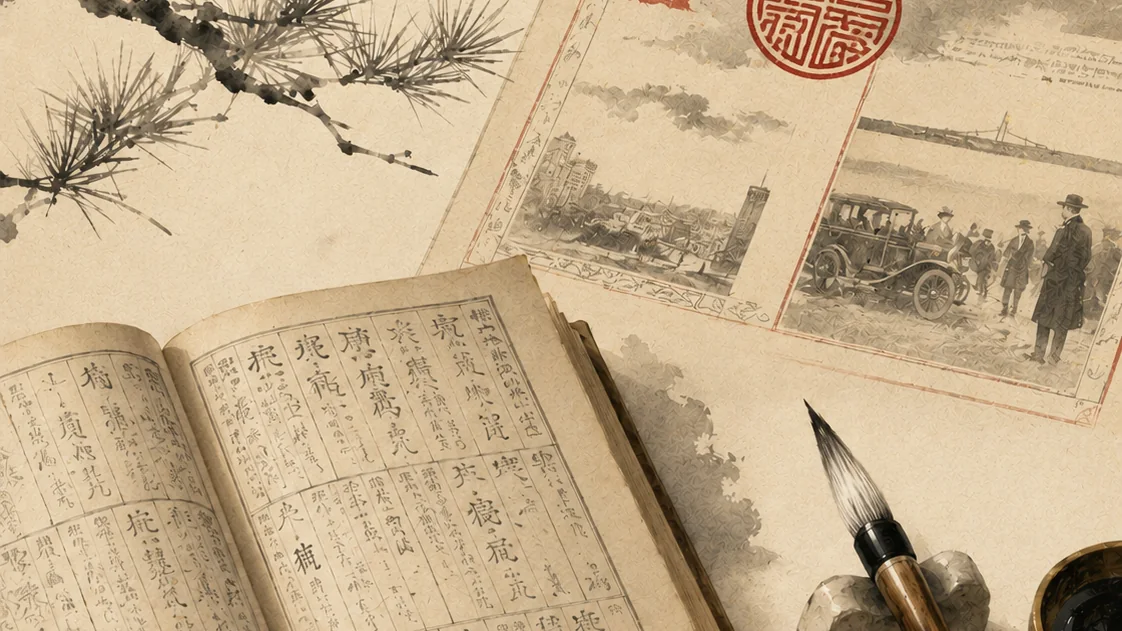
The honest version is more interesting. The framework that nearly every shop and naming service uses today was put into its modern form remarkably recently, by one man: Kumazaki Ken'ō (1881–1961). He founded his school, Goseikaku, in 1928, and in 1929 published Seimei no Shinpi ("The Mystery of Names"), which became a runaway bestseller and the template for almost everything that followed.
His method scores a name across five "grids" (go-kaku) — heaven, person, earth, outer, and total — using stroke counts taken from old character forms in the Qing-dynasty Kangxi Dictionary, then layers on five-element and yin-yang relationships. By tradition, the story goes that Kumazaki started out trying to disprove fortune-telling and ended up convinced. Whatever the truth of that origin story, the system itself is less than a hundred years old.
So when a shop tells you your name carries an ancient verdict, the lineage is real but short: it largely runs back to a 1929 book.
Read the original, and the cracks show
The "ancient numerology" framing doesn't survive a close reading of the founding text. In a 2021 academic presentation in Japan, a scholar who studied Seimei no Shinpi line by line pointed out that the famous table of "spirit-numbers" — the 1-to-81 scale of lucky and unlucky stroke counts that the whole system rests on — was Kumazaki's own creation, built on the number theory of the I Ching rather than handed down intact from antiquity. The book leans on divination, the ten celestial stems, number-mysticism, and kotodama (word-spirit) far more than the tidy "just count your strokes" picture suggests, and the same scholar flagged internal contradictions in how it defines innate versus acquired fortune.
There's an even more telling detail about how it spread. Seimei no Shinpi began life as a serialized feature — including a New Year's supplement — in Shufu no Tomo, a popular women's magazine of the day. The framework that now carries the full weight of "tradition" in seal shops entered Japanese culture through mass-market magazine pages in 1929, not through an ancient scroll.
Even the experts don't agree with each other
Here's the part that says the most. If stroke-count fortune were a precise science, every reader would get the same answer from the same name. They don't.
Different schools count differently. The Kumazaki school uses old character forms; the Kuwano school uses modern simplified ones; other schools weigh the sound of a name, or the arrangement of the characters. Because a single radical can be counted as three strokes or six depending on the school, the same name can come out lucky in one system and unlucky in another.
This isn't a secret criticism from outsiders. Japanese name-divination portals say it plainly themselves: there is no single "correct" school, and the accuracy of the method can't really be compared scientifically. Their own advice is usually to pick a reading that you find meaningful and take it in a positive spirit — which is a graceful way of saying it's an interpretive tradition, not a measurement.
The "eight directions" and the open secret of the lucky seal
Now the seal itself. The script you'll see promoted as the most auspicious is insō-tai — also called kissō-tai ("lucky-form style") or happō-tensho ("eight-direction seal script"). Its strokes reach out toward all eight edges of the seal, and that outward, "spreading" shape is read as a sign of expanding fortune.
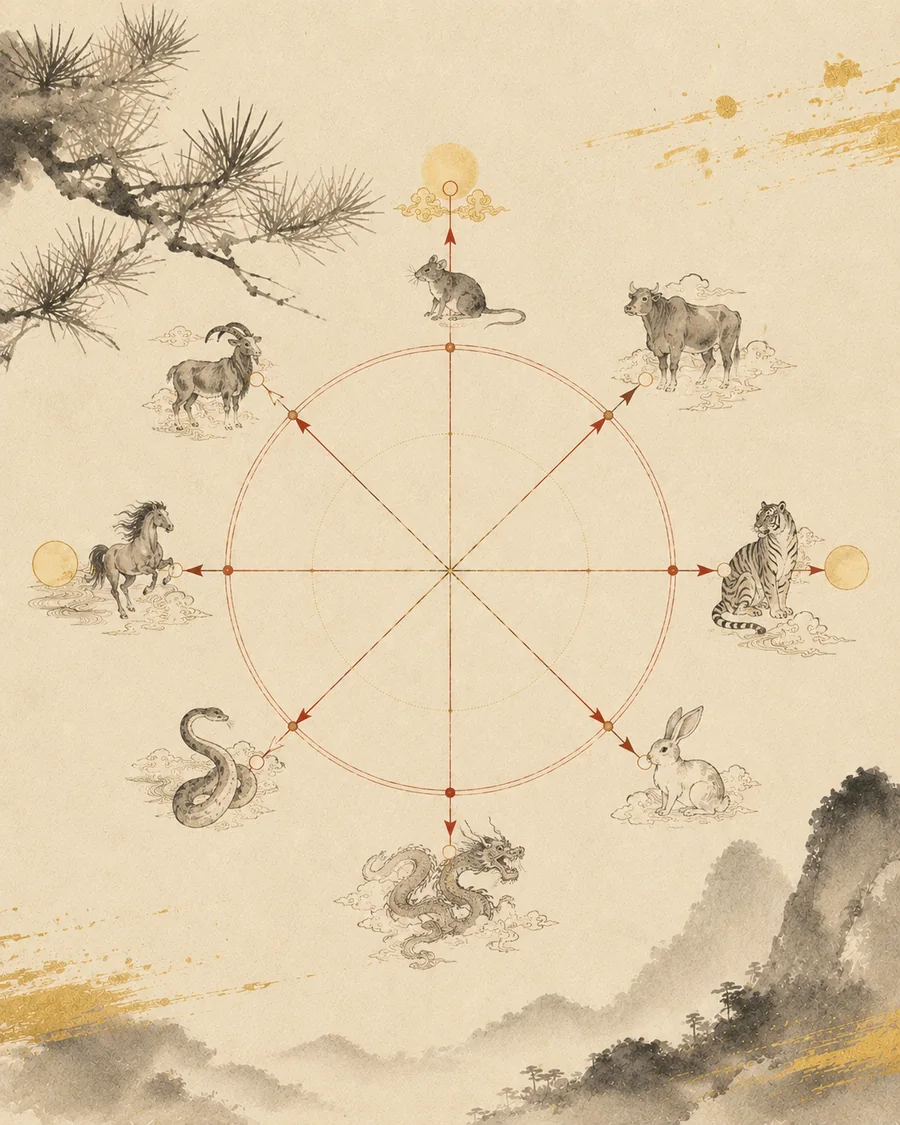
It's a genuinely striking style. But within the seal trade, its history is openly acknowledged to be modern. Insō-tai is a relatively recent offshoot of classical seal script (tensho). The word insō — "seal physiognomy" — was originally a Buddhist term with nothing to do with stamps; it was applied to seals much later. By accounts within the industry, the "lucky seal" (kaiun-inkan) was marketed in earnest only from around the mid-1960s onward, with the underlying ideas circulating in print a decade or so before that.
The mechanism is where honesty matters most. A typical lucky-seal shop will run your name through stroke-count divination, find an "unlucky" total — and then fix it. The technique, called setten-zōga-hō, adds contact points where the carved strokes touch the seal's outer ring, and counts those contact points as extra strokes until the unlucky number becomes a lucky one. Particular directions on the seal face are thickened to emphasize a chosen kind of fortune.
In other words, the "unlucky" verdict and the paid "cure" come from the same shop. Some seal-makers within the trade have said so bluntly, even publishing trade-journal admissions that the lucky-seal business was, in candid terms, a clever piece of modern salesmanship rather than an inherited tradition.
To be clear about what deserves the criticism here: it's the sales tactic — frightening someone with a verdict and then charging to undo it. That's a very different thing from the eight directions themselves, which belong to a far older and far more interesting current of thought. It's worth separating the two.
So what is true about a seal?
We don't think any of this makes a seal worthless — far from it. It just means being clear about which claims stand on solid ground.
True, and provable: a well-composed seal in this dense, interlocking style is genuinely hard to forge and copy — the low readability that makes it mysterious also makes it secure. Its strokes meeting the ring make it physically durable. And a seal composed for your name alone is one of one: no two are the same. These aren't beliefs. They're properties of the object.
Traditional, and worth taking seriously: the eight directions, the auspicious spreading of the strokes, the sense of fortune carried in a mark — these belong to a long, living current of thought about orienting ourselves in space and giving direction meaning. That current runs through far more than seals. The wider family it comes from — the East Asian art of reading place and direction, feng shui among it — is too often dismissed as pure superstition, and that dismissal is as lazy as the opposite claim that it "works." The honest middle is more interesting: peer-reviewed studies have found that parts of it concerned with landscape, light, shelter and water line up well with environmental psychology and sustainable design, while its core notion of flowing energy remains unproven. What scholars tend to value most isn't a guaranteed effect but the way the tradition makes you re-see a space and your place in it.
The eight directions of a seal sit inside that lineage. We can't tell you a particular direction will change your fortune — no one honestly can, and we won't pretend the carving on a seal face works like the siting of a house. But the impulse underneath it, to fill a mark with orientation and meaning, is ancient, near-universal, and genuinely beautiful. It deserves respect, not a verdict — in either direction.
Where SealFont stands
This is exactly why we don't sell fortune — and why we don't sneer at it either.
When your SealFont signet is composed, we read its eight directions and tell you which one it leans toward — Fortune & Standing, Love & Protection, Vital Energy, and the rest. We offer that reading the way it deserves to be offered: by tradition, in good spirit, never as a prediction. We will never tell you a name is "unlucky" and charge you to repair it. There is nothing to repair — and there never was.
What we give you instead is the real thing the tradition was always about underneath the sales pitch: your name, rebuilt in the spirit of insō-tai, balanced into a single mark that reads, at a glance, as a Japanese seal — carrying, if you like, the old wish for fortune in all eight directions. A piece of culture, made yours. That part is true.
A note on sources: this article draws on the publicly stated history from Japanese name-study houses (including Goseikaku, founded by Kumazaki Ken'ō), on a 2021 scholarly presentation that closely re-read Kumazaki's original text, and on working seal-makers and seal-trade commentary in Japan. Where a claim is a matter of tradition or belief rather than established fact, we've said so.
Your name, made yours
No fortune sold, no "unlucky" name to fix. Just your real Latin name, rebuilt in the spirit of insō-tai and balanced into a single mark that reads, at a glance, as a Japanese seal — with its eight directions read for you, by tradition and in good spirit. One of one, delivered as high-resolution PNG with a full commercial license.
Create yours →New here? Start with What Is a Hanko? or browse the Journal.